A Background of Sin
I had my first bouts of real depression at the tender age of 8 years old. Depression runs in my family so the circumstances of my early childhood combined with genetics created a perfect storm for depression to rear its ugly head at a very young age.
I didn’t have the most typical sort of childhood for an American kid. When I was 8 my parents moved our family to Chile so my dad could work as a Fundamentalist Independent Baptist missionary. His goal was to open Baptist churches there and convert people. We lived there for 6 years doing just that!
Some of my earliest memories consist of being told that I was born a filthy sinner and that I was going to hell. The only way to be saved from hell was to beg for forgiveness and stop sinning. Just imagine how damaging that can be for a little kid, to be told that they are bad simply for being human. I internalized this condemnation and grew up convinced that I was inherently flawed, that I was broken and in need of “fixing”.
By the age of 6, I had developed a deep anxiety and fear of falling asleep at night because I was terrified that Judgment Day was going to come in the middle of the night while I was unprepared and unforgiven. I was used to hearing preachers at church literally yelling at the audience that Judgment Day was coming and if we weren’t prepared then off to hell we would go! It didn’t matter how many hours I spent praying frantically in my bed, begging for forgiveness, because I just couldn’t stop being a “dirty sinner”. All those long hours of late night anxiety eventually developed into insomnia, a sleep disorder that still plagues me to this day. Even now, years after I have left behind that religious indoctrination, I still have nightmares of global disasters: tornadoes, hurricanes, tsunamis, and earthquakes ripping the ground open to suck people down to hell.
When my family moved to Chile I suddenly found myself plunged into a foreign culture where I had to learn a new language to communicate with everyone around me. Due to my strict religious upbringing I already had low self-esteem, so when I had to deal with being the “different” kid in school I found it very difficult to fit in. Kids in school made fun of me for my accent and my acne. They judged me for my sad, angry face. Everyone told me to smile more. I didn’t know how else to look. It’s hard to be upbeat and jolly when you’ve been told all your life that you’re a sinner, spanked often, and told that normal human behavior was wrong.
As I went through puberty I developed a deep hatred for my body. What should be considered normal human teenage urges were, to me, a sign that my body was the physical manifestation of my sinful nature and that I was losing the battle against sin. I had crushes on boys at school and was shamefully astonished by the fantasies of which I was capable. When I developed a crush on a girl at the age of 13 I was especially horrified! Why couldn’t I stop being such a disgusting sinner? I became convinced that I was ugly and that my face was grotesquely crooked. I developed Body Dysmorphia and an eating disorder as a coping mechanism.
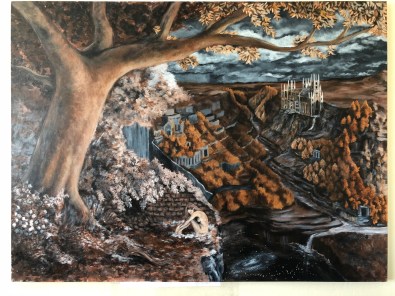
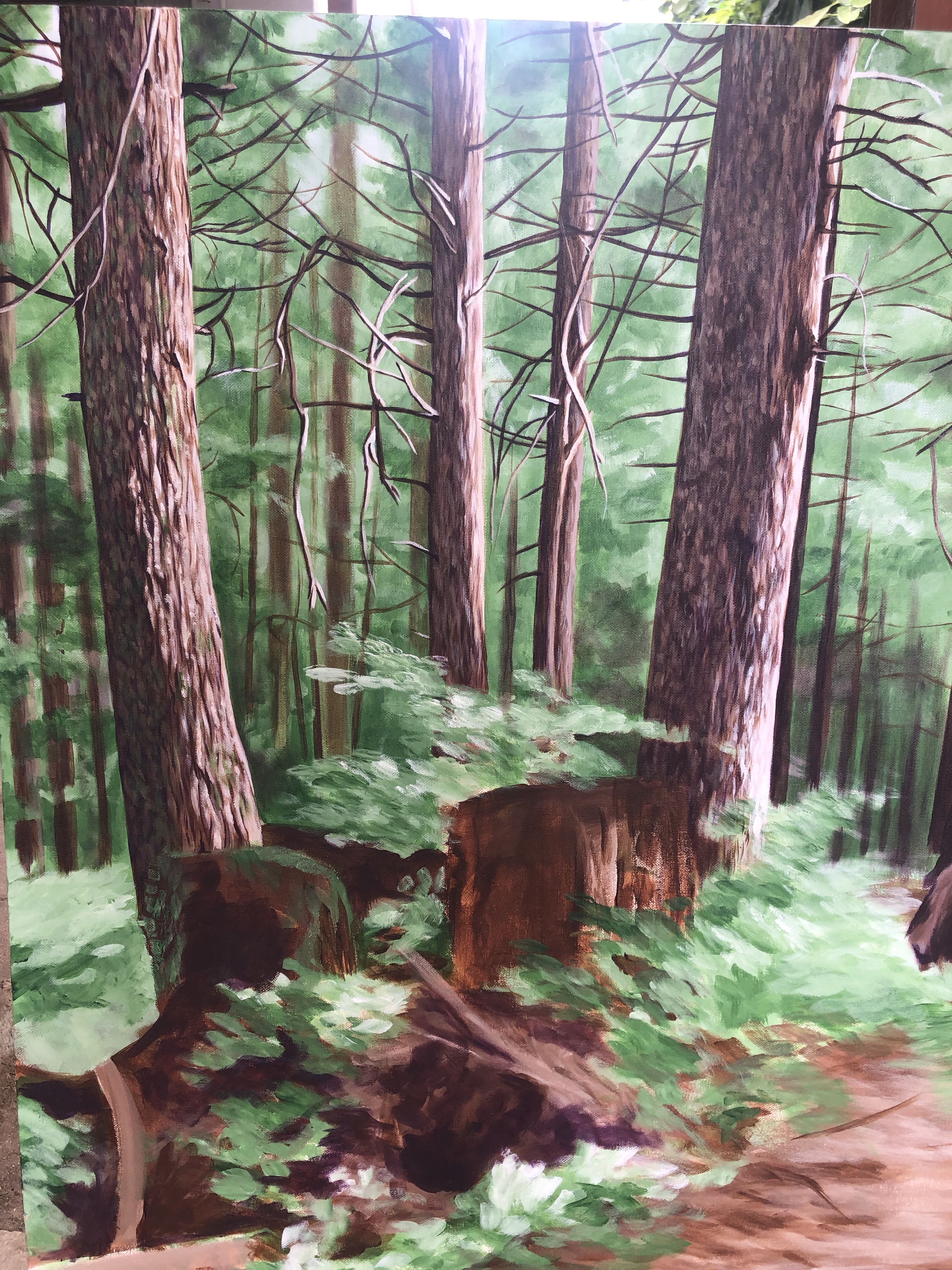
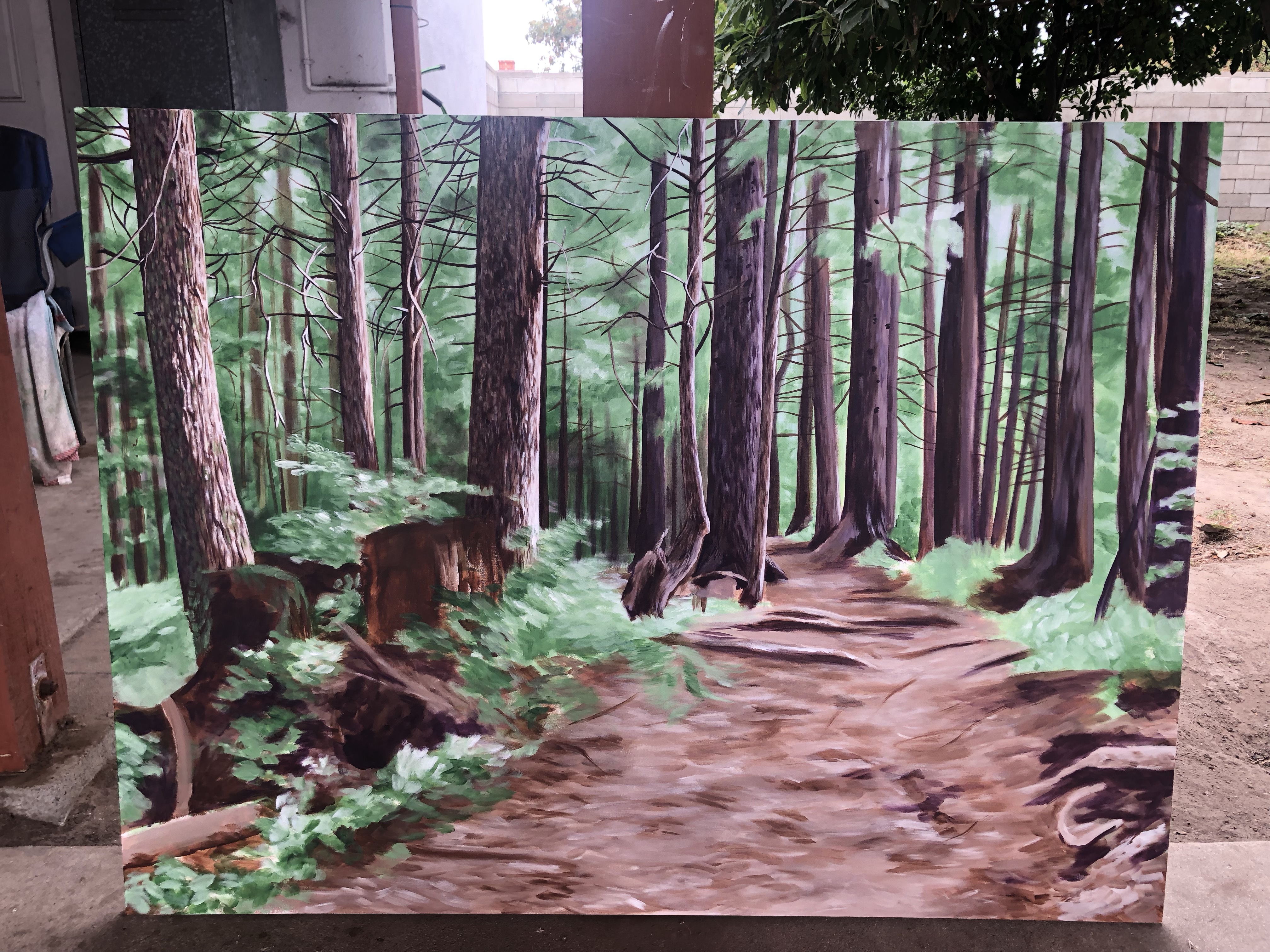
(Below: A work in progress. This painting depicts my lifelong struggles with the damaging beliefs that were pounded into my head from birth.)
How Art and Nature Saved Me
Through all my years as a troubled child, I had my art to soothe me. My art was the one thing that I loved about myself. It was the one natural ability I had that wasn’t a “sin”, that even the strictest religious leaders in my life admired. It was the one thing that I could do that was praised by those people in my life who otherwise told me I was a filthy sinner destined for hell if I couldn’t get my act together. (I couldn’t even play my classical guitar without one particular religious leader telling me that it was satanic because “classical music isn’t Christian”.) Art was my virtue.
From the very beginning, I’ve had an intense interest in Nature. That fascination has always been expressed through my artwork. I started by drawing pictures of animals and trees. As a kid, I obsessively watched nature documentaries with my sketchbook on my lap, drawing the animals and plants I saw on TV. I just couldn’t get enough of all the information there is about wildlife, humanity, the Earth, and the Universe.
I have a childhood memory of a time I was lying on the ground in my backyard, looking up to the sky peeking through the leaves and branches of the trees above me. I breathed in that fresh, spring air as I listened to the trees whispering in the same gentle breeze that softly touched my skin. Everything felt right in that moment. I was part of nature and I could feel it with all my senses.
Over the years, as I continued to educate myself on the laws of nature, I began to grow away from the destructive beliefs that had damaged my self-esteem. I watched nature documentaries and scoured the internet for information on human culture and evolution. I became obsessed with space, science, and anthropology and I just could not stop drawing it all.
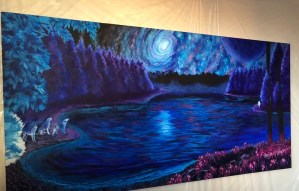
(Below: A painting in progress. This painting depicts my fascination with Nature and space.)
Looking back, I now realize that my pursuit of information about Nature was, in fact, a search for REALITY. I was desperate for the truth, of which my cult-like religion had deprived me. I was tired of being told that nature was wrong. Deep down, in spite of all that indoctrination, I knew something wasn’t right, that everything I had been told was a lie.
I now see Nature as the ultimate reality of the Universe. Nature IS reality. It is everything that exists in our universe, independent of human opinion and interpretation. Humanity could go extinct tomorrow and Nature would continue on without us. We are an infinitely tiny fraction of Nature. We don’t even yet understand everything there is to know about the universe. So who are we, as tiny humans, to decide that we are more important than the rest of Nature? Who are we to judge each other for being human?
Nature doesn’t care what we believe. In the end, we all succumb to the natural process of death and the world continues on without us. To me, that is beautiful! How amazing that we get to participate in nature, even if it’s only for the brief amount of time we have to live!
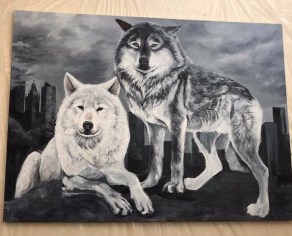
(Below: A painting in progress. These 2 wolves, posed in front of a decaying urban backdrop, represent my view of the human relationship with Nature and how human civilization is a mere moment in the vast expanse of time, a tiny fraction of the Universe.)
A Continuing Struggle With Depression
Even today, many years after I left behind my strict, religious past, I still struggle with depression. I’ve tried many things over the years to deal with it, including medication and therapy. Depression, for me, feels like a complete loss of motivation combined with self-loathing and cruel thoughts directed at myself. As I’ve gotten older, I’ve found that dissecting and analyzing my childhood experiences has been the most healing part of my journey. I may have a genetic predisposition to depression, but learning to love myself and accept my human nature has made it infinitely easier to deal with.
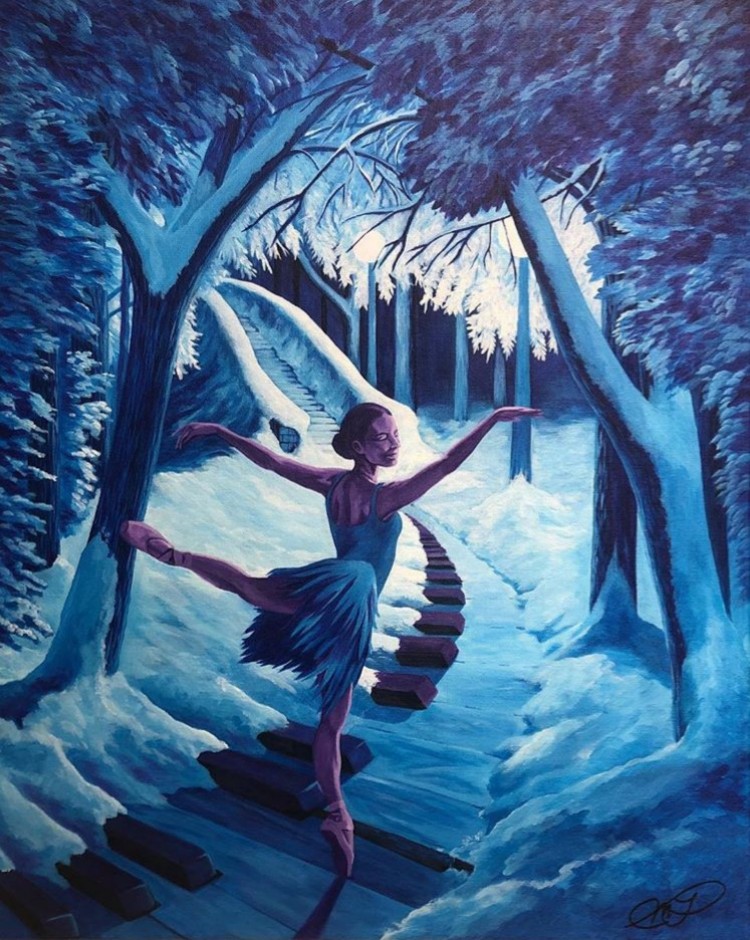
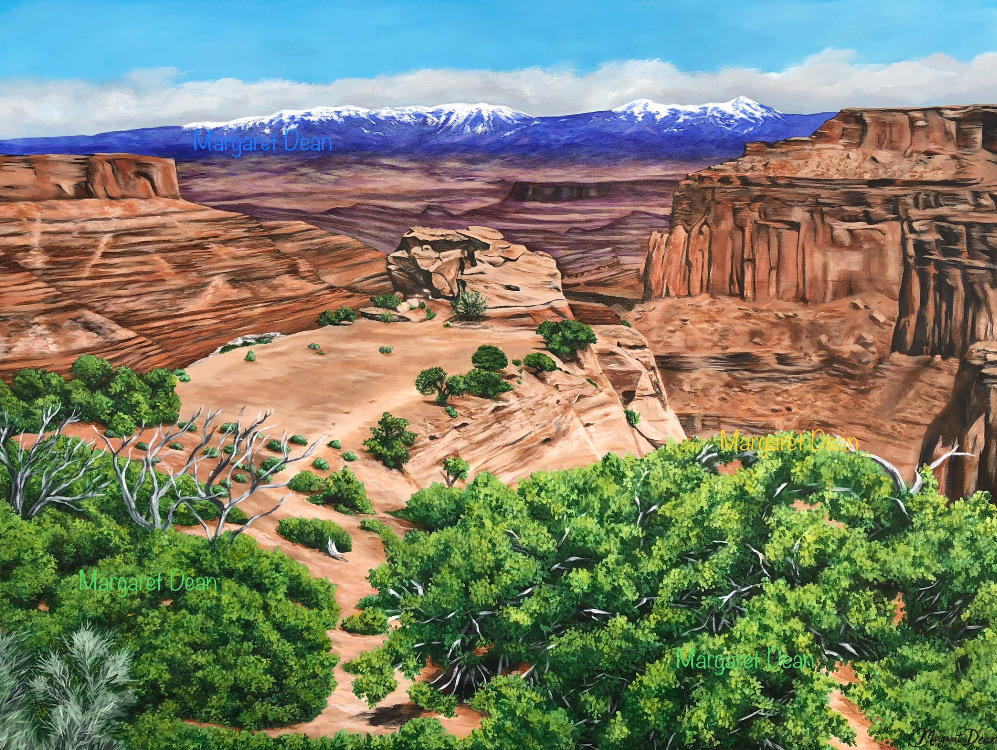
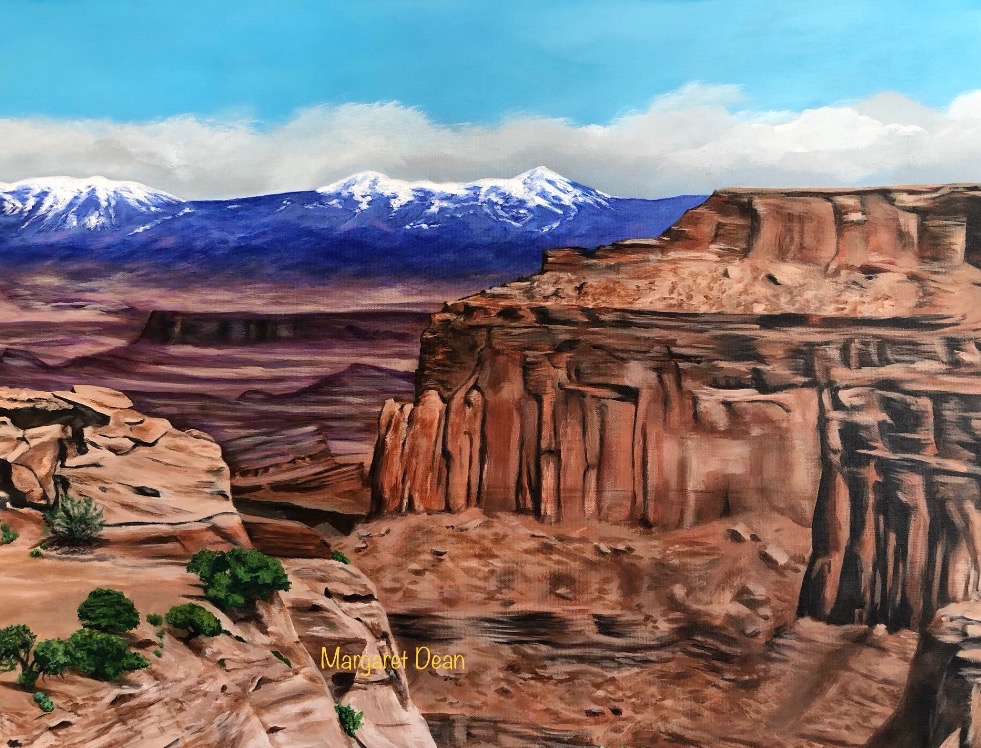
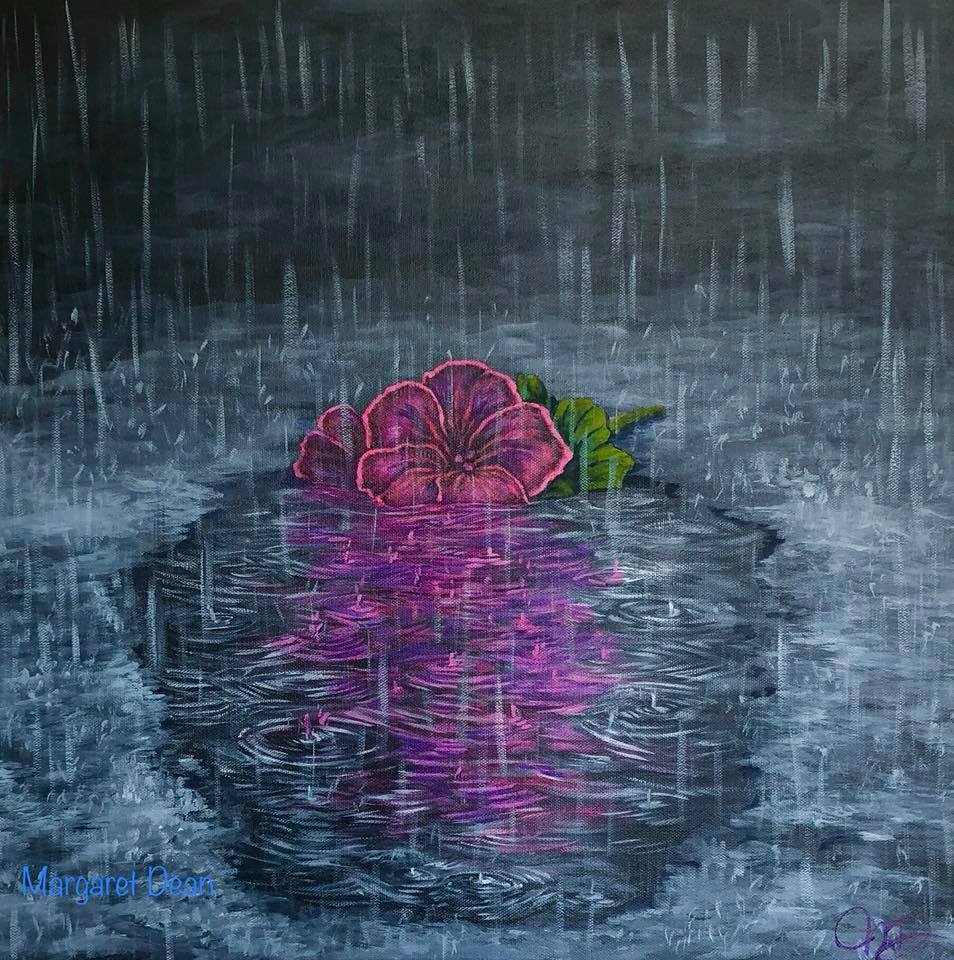
I still have sudden bouts of depression, at least the physical side of it, from time to time but they are significantly less detrimental now. I now use my art as a way to express my views of the world. I paint moody landscapes to express how my moods and emotions color my view of reality.
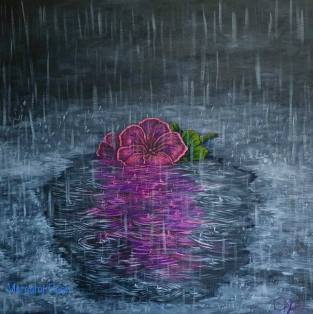
(Below: “Melancholy”. A painting that expresses what depression feels like. I wrote a blog post about it here.)
Disclaimer:
To be clear, I don’t blame my parents at all for anything I went through. I see them as victims of a pervasive, cult mentality that sucked them in and brainwashed them when they were just barely entering adulthood themselves. Fortunately, now, they have also left that past behind and our family has grown very close through our shared experiences.
I do not judge people who believe in religion. I recognize that everyone sees religion differently and that my own experiences don’t represent those of everyone who has been raised in a church. This is simply my story and I feel it’s important to share it.

 ,
,  ,
,  ,
,  ,
,  ,
,  ,
,  , and
, and  . I typically work with a very limited palette of only 3 colors at a time, such as in my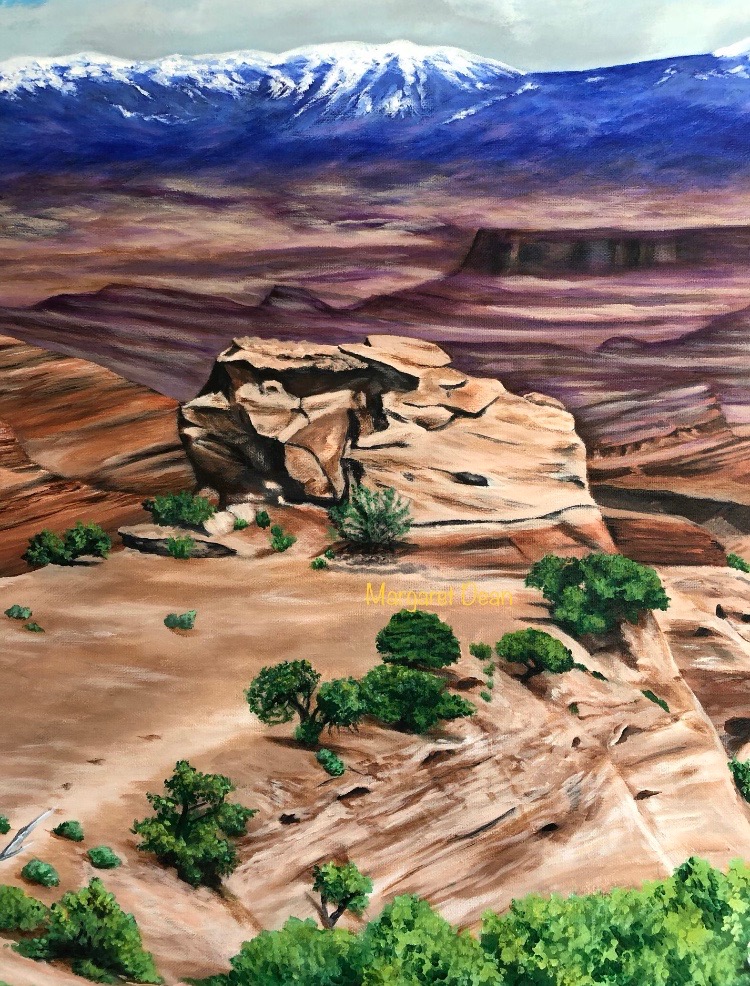




 Tattoo Artist & Painter